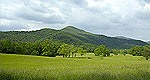





Ridge upon ridge of endless forest straddles the border between North Carolina and Tennessee in Great Smoky Mountains National Park. World renowned for the diversity of its plant and animal life, the beauty of its ancient mountains, and the quality of its remnants of Southern Appalachian mountain culture, this is America's most visited national park.
The Basics
Hours:
Great Smoky Mountains National Park is open 24 hours a day, 365 days a year. However some secondary roads, campgrounds, and other visitor facilities close in winter.
In addition, all roads and facilities are subject to temporary closures due to weather and construction. For updated information about road and facilities closures, please call (865) 436-1200.
Visit Great Smoky Mountains National Park's official online store for books, maps, and guides to the park. Operated by the nonprofit Great Smoky Mountains Association, proceeds generated by purchases at the store are donated to educational, scientific, and historical projects in the park.
The following routes provide access to the park's three main entrances
Gatlinburg, TN entrance From interstate highway I-40, take Exit 407 (Sevierville) to TN-66 South. At the Sevierville intersection, continue straight onto US-441 South. Follow US-441 through Sevierville and Pigeon Forge into park.
Townsend, TN entrance
From the north From interstate highway I-40 in Knoxville, take Exit 386B to US-129 South to Alcoa/Maryville. At Maryville proceed on US-321 North/TN -73 East through Townsend. Continue straight on TN-73 into the park.
From the south From interstate highway I-75, take Exit 376 to I-140 E towards Oak Ridge/Maryville. Merge onto I-140 E via Exit 376B towards Maryville. Turn onto US-129 South (Alcoa Highway) at Exit 11A and travel towards Alcoa. Turn onto TN-35 and follow it to US-321 North. Follow US-321 North/TN -73 East through Townsend. Continue straight on TN-73 into the park.
Cherokee, NC entrance
From the north From interstate highway I-40, take Exit 27 to US-74 West towards Waynesville. Turn onto US-19 and proceed through Maggie Valley to Cherokee. Turn onto US-441 North at Cherokee and follow the road into the park.
From the south Follow US-441/US-23 North. At Dillsboro, merge on US-74 West/US-441 North. At Exit 74 merge onto US-441. Follow US-441 through Cherokee and into the park.

Climate
Great Smoky Mountains National Park has a moderate climate, typified by mild winters and hot, humid summers. When planning a trip to the Smokies, keep in mind that elevations in the park range from 800 feet to 6,643 feet and that the topography can drastically affect local weather. Temperatures can vary 10-20° Fahrenheit from mountain base to top, and clear skies at lower elevations do not guarantee equally pleasant weather on the higher peaks.
Whether you delight in the challenge of a strenuous hike to the crest of a mountain or prefer to sit quietly and watch the sun set, Great Smoky Mountains National Park offers a myriad of activities for you to enjoy. The hardest part may be choosing which auto tour, trail, waterfall, overlook, or historic area to explore!
Auto Touring - An auto tour of the park offers a chance to see panoramic vistas, rushing mountain streams, weathered historic buildings, and majestic forests stretching to the horizon. Inexpensive booklets are available to serve as your personal tour guides along many park roads.
Bicycling - Ride through Cades Cove on a misty summer morning for a truly memorable way to experience the park.
Camping - Escape into the Smokies wilderness for a backpacking adventure or opt for a tamer excursion in one of the park's developed campgrounds.
Fishing - Anglers can match their skills against wily brook, brown, and rainbow trout on over 700 miles of fishable streams in the park.
Hiking - Choose from over 800 miles of trails ranging from quiet walkways to multi-day backpacking treks through the backcountry.
Historic Buildings - The park has one of the best collections of log buildings in the eastern United States. Nearly 80 historic structures—homes, barns, churches, schools, and grist mills—have been preserved in the park.
Horseback Riding - The park has hundreds of miles of horse trails and five drive-in horse camps. If you don't own a horse, four rental stables provide mounts and guides.
Picnicking - Craving hotdogs, potato salad, water melon... and ants? There are eleven picnic areas to choose from in the park—many have pavilions that can be reserved in advance.
Waterfalls - Waterfalls can be found on nearly every river and stream in the park. Here's your guide to some of the best.
Wildflowers - Great Smoky Mountains National park is known as the "wildflower national park." You can find blooming plants year-round here, but spring and summer are renown for spectacular displays of wildflowers along roads and trails.
Wildlife Viewing - Hoping to see an elk, white-tailed deer, or black bear? Read some tips to improve your chances of spotting animals during your visit to the park.
Visit Great Smoky Mountains National Park's official online store for books, maps, and guides to the park. Operated by the nonprofit Great Smoky Mountains Association, proceeds generated by purchases at the store are donated to educational, scientific, and historical projects in the park.
Picknicking
Picnic areas are located at Big Creek, Chimney Tops, Cades Cove, Collins Creek, Cosby, Deep Creek, Greenbrier, Heintooga, Look Rock, Metcalf Bottoms, and Twin Creeks.
The picnic areas at Cades Cove, Chimney Tops, Cosby, Deep Creek, Greenbrier, and Metcalf Bottoms remain open year-round. The remaining picnic areas are closed during the winter. See schedule below.
All picnic areas have pavilions except Chimneys and Cades Cove. The picnic pavilions at Collins Creek, Cosby, Deep Creek, Metcalf Bottoms, and Twin Creeks can be reserved for groups one year in advance by calling (877)444-6777, or on the Internet at http://www.recreation.gov. All pavilions except Twin Creeks cost $20 per use. Twin Creeks' fee ranges from $35-75 depending on the usage. Payment can be made by credit card or personal check at the time the reservation is made.
Please remember that feeding bears and other wildlife is illegal. The black bear symbolizes the invaluable wilderness qualities of Great Smoky Mountains National Park. But bears are dying unnecessarily due to improper disposal of garbage or illegal feeding by visitors. A bear’s remarkable sense of smell may lead it to human foods, such as a picnicker’s cooler, garbage left in the open, or food scraps thrown on the ground or left in the grill.
A bear that has discovered human food or garbage will eventually become day-active and leave the safety of the backcountry. It may panhandle along roadsides and be killed by a car or it may injure a visitor and have to be euthanized. Please do your part to help protect black bears and other wildlife in the Great Smokies. Clean your picnic area, including the grill and the ground around the table, thoroughly after your meal.
Hiking
Caution is advised in the backcountry. The park's backcountry is managed as a natural area where the forces of nature determine trail conditions. Please be prepared for swollen streams, bridge washouts, downed trees, and trail erosion—particularly between December and May due to the seasonal nature of the trail maintenance program.
Hikers enjoy the Smoky Mountains during all months of the year with every season offering is own special rewards. During winter, the absence of deciduous leaves opens new vistas along trails and reveals stone wills, chimneys, foundations, and other reminders of past residents. Spring provides a weekly parade of wildflowers and flowering trees. In summer, walkers can seek out cool retreats among the spruce-fir forests and balds or follow splashy mountain streams to roaring falls and cascades. Autumn hikers have crisp, dry air to sharpen their senses and a varied palette of fall colors to enjoy.
One of the most daunting tasks facing hikers is choosing a trail. Start by deciding on what you would like to see. Waterfalls? Old-growth forests? Endless views? Then decide how far you would like to hike. If you haven't hiked much recently, be conservative. Five miles roundtrip is a good maximum distance for novices.
Be sure to allow plenty of time to complete your hike before dark. As a rule of thumb, hikers in the Smokies travel about 1.5 miles per hour. Many people travel slower. Sunset times vary from just after 5:00 p.m. in December to almost 9:00 p.m. in June. Important hiking safety tips.
Trail maps are available for download or may be purchased from the Great Smoky Mountains Association which also sells a wide variety of hiking books, maps, and guides to help choose a hiking route and plan your backcountry trip. Visit the Association's online bookstore or phone (888) 898-9102. The Great Smoky Mountains Association is a nonprofit organization that supports educational and scientific programs in the park. In addition, USGS Quad maps can be downloaded from the Discover Life in America website or purchased online.
You may also call the Backcountry Information Office at (865) 436-1297 for information to plan your hiking or backpacking trip. The office is open daily from 9:00 a.m. until noon (Eastern Standard Time). In addition to answering your backpacking questions, the experienced backpackers in the Backcountry Information Office can provide you with tips to make your trip safe and enjoyable.
Beware of parking lot thieves who break into cars parked at trailheads to steal purses, cameras, and electronic equipment. The best defense is to lock your car and take your valuables with you, or leave them at home. Be aware that thieves may be in the parking area watching as you slip your wallet into the glove box or "hide" your laptop under a blanket.
Great Smoky Mountains National Park has about 2,115 miles of streams within its boundaries, and protects one of the last wild trout habitats in the eastern United States. The park offers a wide variety of angling experiences from remote, headwater trout streams to large, coolwater Smallmouth Bass streams. Most streams remain at or near their carrying capacity of fish and offer a great opportunity to catch these species throughout the year.
Fishing is permitted year-round in the park, from 30 minutes before official sunrise to 30 minutes after official sunset. The park allows fishing in all streams except the following streams and their tributaries upstream from the points described:
North Carolina Bear Creek at its junction with Forney Creek.
Tennessee Sams Creek at the confluence with Thunderhead Prong
Indian Flats Prong at the Middle Prong Trial crossing
These streams are closed to fishing to allow fish to repopulate following restoration work.
License Requirements
You must possess a valid fishing license or permit from either Tennessee or North Carolina. Either state license is valid throughout the park and no trout stamp is required. Special permits are required for fishing in Gatlinburg and Cherokee.
Tennessee License Requirements
Residents and nonresidents age 13 and older must have a valid license. Residents age 65 and older may obtain a special license from the state.
North Carolina License Requirements
Residents and nonresidents age 16 and older need a license. Residents age 70 and older may obtain a special license from the state.
Persons under 16 in North Carolina and under 13 in Tennessee are entitled to the adult daily bag and possession limits and are subject to all other regulations.
Season
Fishing is permitted year-round in open waters.
Time
Fishing is allowed from a half hour before official sunrise to a half hour after official sunset.
Daily Possession Limits
Five (5) Brook, Rainbow or Brown Trout, Smallmouth Bass, or a combination of these, each day or in possession, regardless of whether they are fresh, stored in an ice chest, or otherwise preserved. The combined total must not exceed five fish.
Twenty (20) Rock Bass may be kept in addition to the above limit.
A person must stop fishing immediately after obtaining the limit.
Size Limits
Brook, Rainbow, and Brown Trout: 7 inch minimum Smallmouth Bass: 7 inch minimum Rock Bass: no minimum
Trout or Smallmouth Bass caught less than the legal length shall be immediately returned to the water from which it was taken.
Lures, Bait, and Equipment
Fishing is permitted only by the use of one hand-held rod.
Only artificial flies or lures with a single hook may be used. Dropper flies may be used. Up to two flies on a leader.
Use or possession of any form of fish bait or liquid scent other than artificial flies or lures on or along any park stream while in possession of fishing tackle is prohibited. Prohibited baits include, but are not limited to, minnows (live or preserved), worms, corn, cheese, bread, salmon eggs, pork rinds, liquid scents and natural baits found along streams.
Use or possession of double, treble, or gang hooks is prohibited.
Fishing tackle and equipment, including creels and fish in possession, are subject to inspection by authorized personnel.
Safety
Standing and wading in streams can drain body heat and lead to hypothermia. Rising water levels resulting from sudden mountain storms occur quite frequently, so monitor water level. Water currents are swifter than they appear and footing is treacherous on wet and moss covered rocks.
Be A Clean Fisherman
If there's a tangle of line, or an empty can at your feet, clean up after your fellow angler.
Other Things to Remember
Disturbing and moving rocks to form channels and rock dams is illegal in the park! Moving rocks is harmful to both fish and aquatic insects that live in the streams. Many fish species the live in the park spawn between April and August. Some of these fish build their nests in small cavities under rocks and even guard the nest. When people move the rock, the nest is destroyed and the eggs and/or young fish die.
The laws protecting park wildlife are contained in the Code of Federal Regulations. It states that “Willfully approaching within 50 yards (150 feet), or any distance that disturbs or displaces bear or elk is prohibited." In addition, feeding, touching, teasing, frightening, or intentionally disturbing wildlife is prohibited.
As a rule of thumb, if you approach an animal so closely that it changes its behavior, you have approached too closely. Instead use binoculars, spotting scopes and cameras with telephoto lenses to enjoy wildlife. Watch for any modification in an animal's behavior that indicates that you have approached too closely. Move away from the animal until you reach a distance at which the animal feels comfortable once again and resumes whatever activity it was engaged in before you approached.
Never feed wildlife or bait animals for closer observation or photography. Feeding park wildlife usually guarantees its demise.
Viewing Tips
Viewing wildlife in the Smokies can be challenging because most of the park is covered by dense forest. Open areas like Cataloochee and Cades Cove offer some of the best opportunities to see white-tailed deer, black bear, raccoon, turkeys, woodchucks, and other animals. The narrow, winding road of Roaring Fork Motor Nature Trail encourages motorists to travel at a leisurely pace and sometimes yields sightings of bear and other wildlife. During winter wildlife is more visible because deciduous trees have lost their leaves.
Because many animals are most active at night, it can be advantageous to look for wildlife during morning and evening. It's also a good idea to carry binoculars. Some people like to sit quietly beside a trail to see what wildlife will come out of hiding. And don't forget to scan the trees—many animals spend their days among the branches.
Horseback Riding
Bringing Your Horse to the Park
About 550 miles of the park's hiking trails are open to horses. Horses are restricted to trails specifically designated for horse use. You may wish to obtain a copy of the park's trail map.
Again, horses are allowed only on trails specifically designated for horse use. Off-trail or cross-country riding is prohibited. Horse riders may use designated campsites located on trails open to their use, however some backcountry campsites must be reserved in advance.
Five drive-in horse camps provide ready access to backcountry horse trails in the park. Camps are located at Cades Cove (Anthony Creek), Big Creek, Cataloochee, Round Bottom, and Towstring. Horse camps are open from April through October. Reservations are required.
Fees are $20 per site, except for Big Creek, which is $25 per site. You must pay for the site when you make your reservation.
Each campsite has a limit of six people and four horses. If you have more than six people or four horses, you will need to reserve more than one site. Sites vary, but generally you are permitted to have two vehicles and two trailers (horse or camping) at each site.
Auto-access horse camps have picnic tables, grills, designated parking spaces (usually gravel), refuse containers, hitch racks and space to pitch a tent or two. Big Creek has flush toilets with cold water. Other horse camps have portable toilets and no drinking water. Water is available for horses either in the campground or at a nearby stream.
Bicycles can travel on most roads within the park. However, due to steep terrain, narrow road surfaces, and heavy automobile traffic, many park roads are not well suited for safe and enjoyable bicycle riding.
Cades Cove Loop Road is an exception. The 11-mile one way road, is a popular bicycling area. It provides bicyclists with excellent opportunities for wildlife viewing and touring 19th century homesites.
Beginning the second week in May, the loop road is closed to motor vehicle traffic Wednesday and Saturday mornings until 10:00 a.m. to allow bicyclists and pedestrians to enjoy the cove. This closure continues through the second-to-last Saturday in September.
Other areas suitable for bicyclists include Greenbrier and Tremont roads in Tennessee, and Lakeview Drive, and Cataloochee Valley in North Carolina. Cyclists may also traverse unfinished portions of the Foothills Parkway in Tennessee.
Safety is always a major concern where cars and bicycles must share the road. The State of Tennessee requires that children age 16 and under wear a helmet. We strongly recommend that all riders wear helmets, use rear view mirrors, and ride properly fitted and well-maintained bicycles. Please obey all traffic regulations.
There are no mountain biking trails in Great Smoky Mountains National Park. The Gatlinburg Trail, the Oconaluftee River Trail, and the lower Deep Creek Trail are the only park trails on which bicycles are allowed. Bicycles are prohibited on all other park trails.
The park offers a wide array of destinations to explore both the natural and the cultural history of the park.
Want to learn about the people who once called these mountains home? Then you may enjoy visiting the Mountain Farm Museum, Cades Cove, Cataloochee, or the Roaring Fork area to tour homes, farms, churches, and other structures built by early settlers.
For a chance to view wildlife including black bear, white-tailed deer, and turkeys, head to open areas such as Cades Cove or Cataloochee.
For sweeping vistas head to the top of the mountains at Clingmans Dome or Newfound Gap.
If you wish to beat a retreat to a cool and shady spot in the forest, then a visit to Deep Creek or Roaring Fork may be what you're looking for.